The garden that grew a leader
“I chose horticulture because plants don’t talk back to you.”
It is not the answer you’d expected from the Chief Executive Officer of Gardens by the Bay, Singapore’s internationally acclaimed horticultural attraction that welcomes around 16 million visitors each year.
Felix Loh laughs at the irony himself.
“As a kid, I was an introvert. I didn’t really converse with people. At least, plants don’t talk back to you.”
Today, of course, his role is as much about people as it is about plants.
The journey from a quiet Singaporean teenager to leading one of the world’s most celebrated urban gardens is anything but conventional. It began with a decision that surprised almost everyone around him.
Choosing the road less travelled
Growing up in Singapore, Felix knew the expected path. Many scholarship students aspired to study medicine, engineering or accounting, often at universities in the United Kingdom.
He chose none of those. Instead, he found himself captivated by a Te Kunenga ki Pūrehuroa Massey University prospectus.
“For an urban kid, subjects like soil science, plant taxonomy and nursery management were the most fascinating things I had ever encountered. I jumped at the chance for adventure,” he recalls.
New Zealand itself held a special appeal. Having learnt about the country in geography classes, he was drawn to its spectacular landscapes and natural environment. More importantly, choosing Massey meant stepping away from the familiar competition that awaited many of his classmates.
It was the beginning of what would become a lifelong relationship with New Zealand.
 Felix with fellow Massey alumnus Dr Tan Puay Yok, Chief Executive Officer of Singapore’s National Parks Board
The kindness that changed everything
Ask Felix what he remembers most about his time at Massey, and he doesn’t begin with lectures or laboratories. He talks about people.
“Kiwis are among the most gracious people I have ever come across. People are warm and welcoming. Most importantly, they always seem to have time for you.”
One person, in particular, changed the course of his life.
In his final year, Felix struggled with public speaking. Years of stuttering had left him lacking confidence. His supervisor, Dr Bruce MacKay, recognised that what Felix needed wasn’t simply presentation skills, it was belief in himself.
Bruce devoted an entire summer to helping him. Together they worked through tone, pacing and eye contact until Felix found something far more valuable than confidence.
“For the first time. I believed I had something worth saying.”
Decades later, the lesson remains with him. “I am eternally indebted to him for his belief in me. It is a profound kindness I can only repay by passing it on.”
Lessons more than horticulture
Although Felix graduated with a Bachelor of Horticultural Science, some of the lessons that shaped him most weren’t about plants at all.
One compulsory English paper required students to critique one another’s work. Coming from an education system where teachers were the unquestioned authority, Felix initially resisted receiving feedback from classmates.
“It was only later in life that I realised the best managers are those who can harness every input from their team.”
Another memorable lesson came during a first-year group project, where students were assigned to teams rather than allowed to choose their friends. When the class protested, their lecturer refused to budge.
“He stood in front of us and declared that in the real working world, we rarely have the luxury of choosing our boss, our colleagues or even our subordinates.”
Looking back more than 30 years later, Felix believes those experiences quietly prepared students for something much bigger than university. “What Massey was teaching us was how to survive and thrive in the working world: to accept criticism with grace, and to work with whoever we are given rather than whoever we would choose,” he reflects.
That philosophy extended beyond teamwork. One of the greatest lessons he took from Massey was that education is a means, not an end.
“We weren’t taught to eat the fish – we were taught how to fish. The content of a textbook may one day be obsolete, yet sound fundamentals and the ability to solve problems never are.”
When life changes direction
Felix’s career did not unfold according to plan.
After returning to Singapore, he joined the Parks Department before travelling to the United States for postgraduate horticultural training. There, a nerve injury temporarily prevented him from returning to field work.
Sometimes careers change because of ambition. Sometimes they change because life has other ideas.
His CEO suggested he move into human resources instead. “The reasoning was that managing people calls for much the same tender loving care as tending to plants.”
One opportunity led to another. Felix moved through operations, policy and corporate leadership, managing increasingly complex portfolios across government. Then came an unexpected phone call.
When Singapore established Gardens by the Bay, his former boss looked at the words “Bachelor of Horticultural Science” on Felix’s name card and decided he probably knew enough about plants to lead the new organisation.
Felix was just 44.
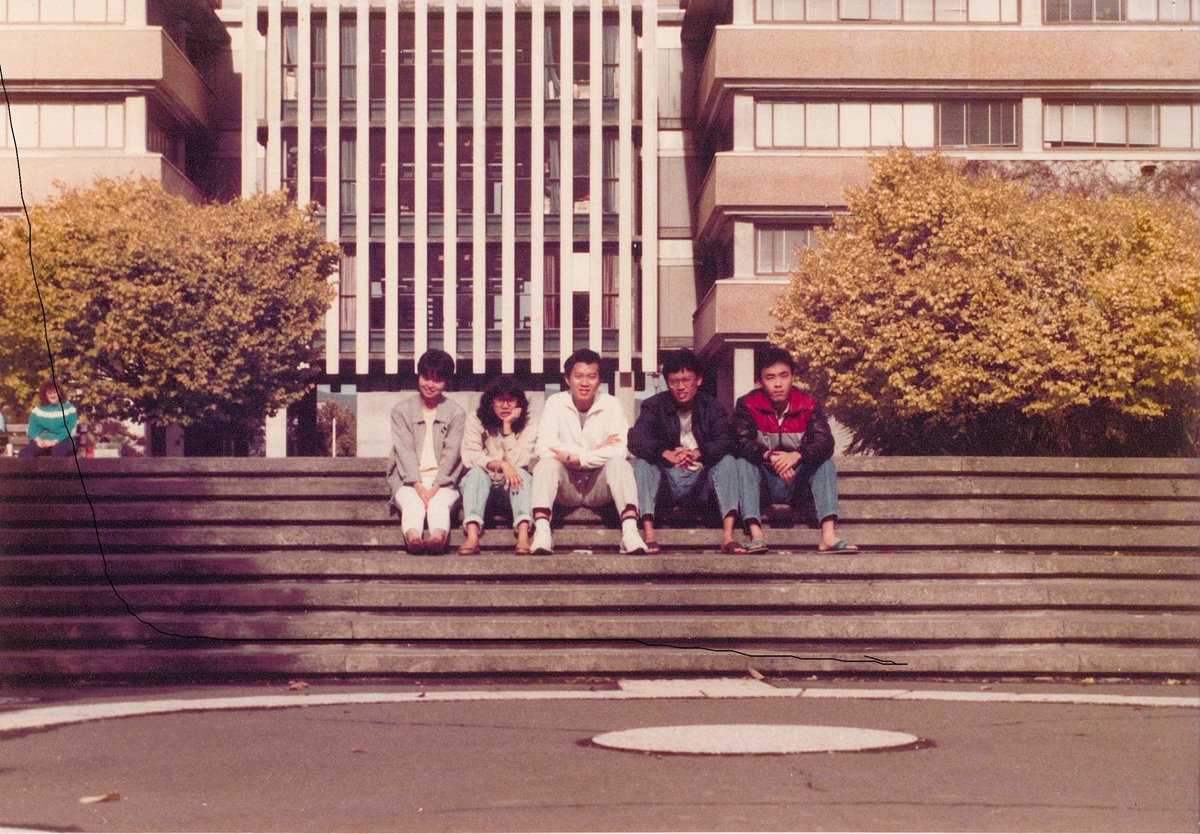 Felix with schoolmates
A place to belong
Today, Gardens by the Bay is recognised around the world for its iconic Supertrees and spectacular conservatories. Yet Felix is quick to challenge a common misconception.
“Many people think the Gardens were built for tourists. In fact, they were conceived as a People’s Garden.”
Approved by the Singapore Government as a national garden, the vision was to create a place where Singaporeans could gather, connect with nature and discover plants from around the world. International recognition came later.
“As foreigners tend to go where the locals go, the iconic Supertrees and Conservatories became a draw only afterwards,” he explains.
What gives Felix the greatest satisfaction is not the Gardens’ global reputation, but seeing Singaporeans embrace it as part of their everyday lives.
“People don’t simply visit the Gardens as an attraction. They celebrate milestones here, make memories with their families and return time and again because they feel it belongs to them.”
Maintaining that sense of belonging while welcoming millions of visitors each year requires a careful balancing act. Felix sees the Gardens as three things at once: a sustainable garden, an iconic destination and a People’s Garden.
“Our challenge is to find ideas that serve all three purposes. Attracting visitors and advancing our environmental and community mission are not competing goals.”
That philosophy shapes everything from immersive exhibitions in Cloud Forest, where visitors learn about fragile ecosystems and biodiversity, to community programmes and festivals that encourage families to connect with both nature and one another.
Sustainability, too, is woven into every aspect of the Gardens, from educational initiatives that inspire environmental stewardship to energy-efficient conservatories and one of Singapore’s largest solar photovoltaic installations.
Felix believes New Zealand also played a part in shaping this outlook. While Singapore’s landscape may be very different, he admires New Zealand’s deep-rooted culture of conservation and environmental education, values he continues to champion at Gardens by the Bay.
For Felix, success is measured by far more than visitor numbers or commercial performance. Every decision considers horticulture, sustainability, community, and placemaking, with the goal of ensuring that the Gardens continue to enrich Singapore for generations to come.
Leading with purpose
Felix believes leadership is ultimately about doing the right thing and inspiring others to do the same. That belief was tested during the COVID-19 pandemic.
With international tourism at a standstill, Gardens by the Bay recorded its first-ever financial loss in 2022. The organisation faced difficult decisions, including whether to suspend community programmes to reduce costs.
Instead, they stayed open.
“Singaporeans who couldn’t travel needed green spaces for respite.”
The decision came at a cost. Staff voluntarily worked longer hours because they believed in the mission. Felix says, “It is not enough for a leader to decide on the right thing. You have to bring people with you.”
The Gardens continued to flourish because everyone chose to make that purpose their own.
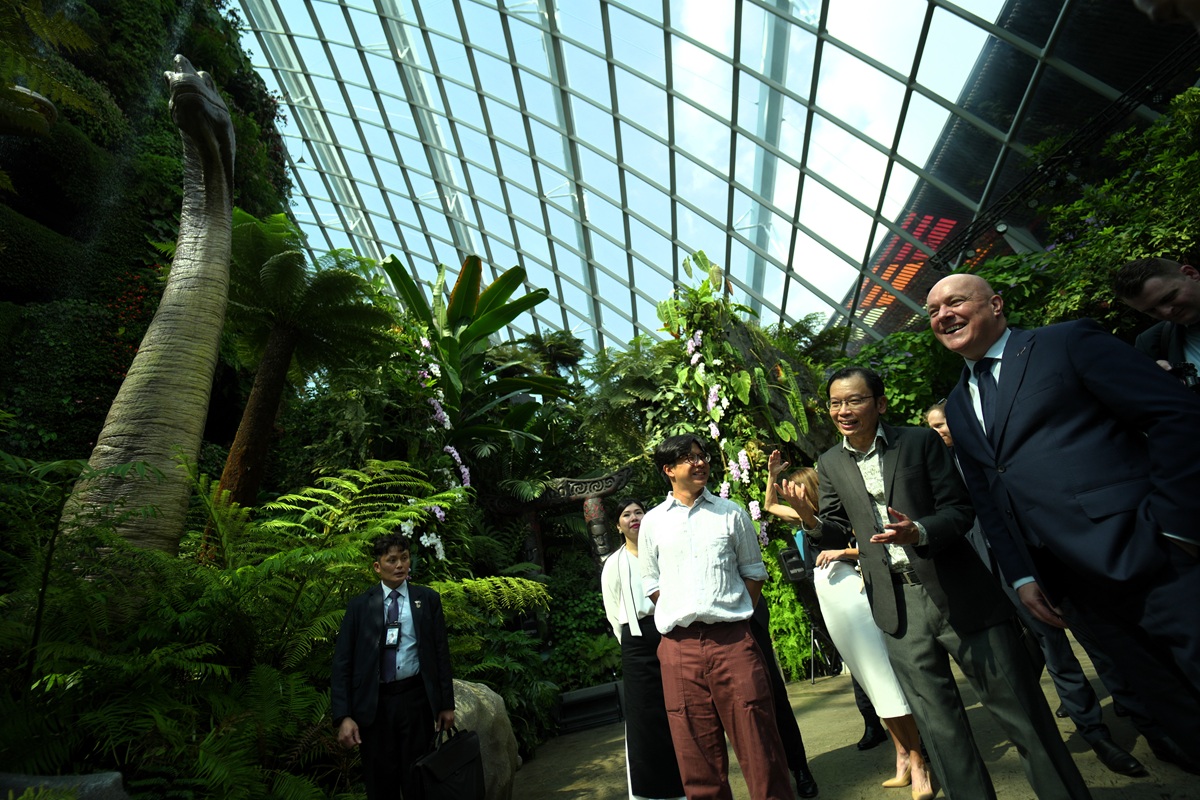 Felix with the New Zealand Prime Minister during the visit to the Gardens on 5 May 2026
Coming full circle
For students considering an unconventional path, Felix offers simple advice: “Do not be afraid of the road less travelled.”
Looking back, he could never have predicted that a decision made at 18 would eventually lead him from horticulture into public policy, corporate leadership and the helm of one of Singapore’s defining national institutions.
After all these years, he says the journey comes down to two things: people and places.
The pursuit of plants has taken him to corners of the world he never imagined visiting. Along the way, he has met master gardeners, village chiefs, colleagues and fellow travellers, each offering a different perspective on life.
At 18, Felix imagined horticulture would offer a quiet life among plants, away from people. Instead, Massey set him on a path that taught him the opposite.
“At the heart of horticulture are people. It is an industry built on relationships. In fact, people and how we relate to them are at the heart of almost every career.”
Many of those he met along the way have become lifelong friends, enriching both his career and his life.
Today, he leads one of the world’s most celebrated gardens, where every day is about bringing people together.
“The plants drew me out into the world. It was the people who gave the journey its meaning.”