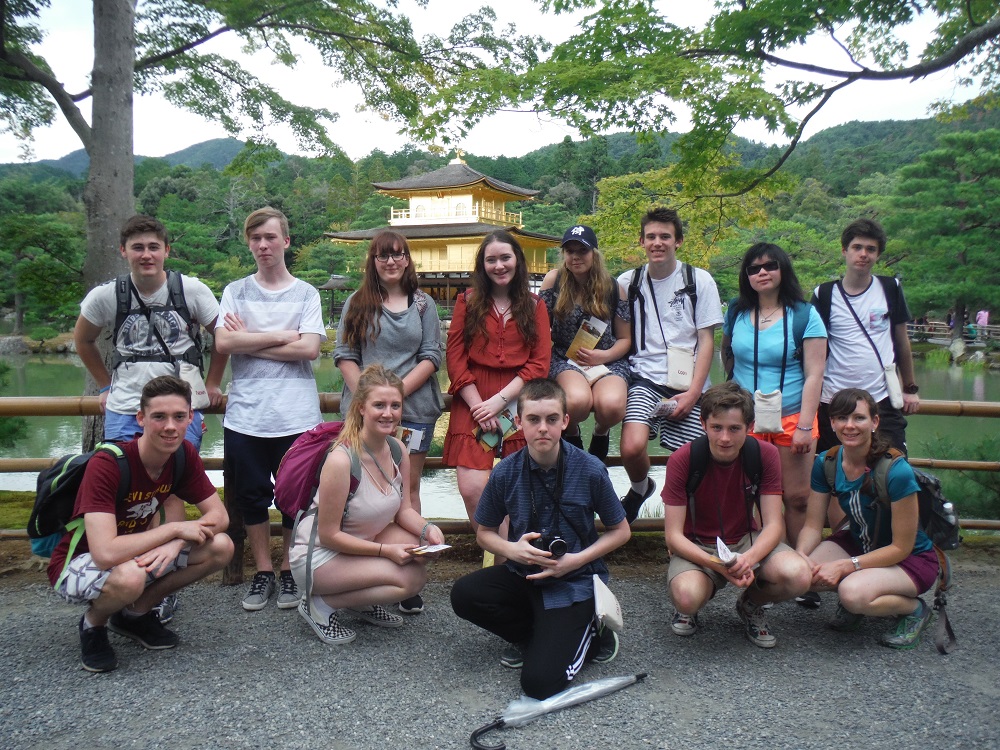
 Japan school trip 2016
A purpose beyond the classroom
“My role as a language and social sciences teacher is not simply to transfer knowledge. It is to provide students with a map and set them on their own, self-guided journey,” Anita Vennell says.
It’s a philosophy that shapes everything she does in the classroom. It guides the way she builds strong, meaningful relationships with her students and encourages them to step beyond their comfort zones and discover their own path as learners.
Finding the path in teaching
For Anita, teaching has always been about more than the subject itself. She wants her students to leave the classroom not only with knowledge, but with confidence, resilience and a willingness to keep learning long after school. Her focus on languages and social sciences reflects this belief. Subjects that, in her view, help young people understand both the world and their place within it.
Her path into teaching wasn’t something she planned from the beginning. As the oldest of three siblings, she naturally took on a teaching role at home, but it wasn’t until later that she saw it as a career. Spending two years teaching English in Japan changed that.
“I really enjoyed my time there and found it incredibly rewarding. I loved learning languages and decided that what better job could there be than combining my passion for languages with a job that was so rewarding,” Anita says.
Encouraged by a friend who had trained as a Japanese teacher in New Zealand, she decided to follow the same path, a decision that would shape the rest of her career.
 Spanish immersion weekend Havelock North 2018
Learning through challenge and discovery
Her own experiences as a language learner have had a lasting influence on how she teaches. Unlike many, she didn’t find language learning easy.
“I learnt both my second languages the hard way. I was not born bilingual and I was never top of my class. I am still not fluent in Japanese or Spanish.”
Rather than seeing this as a disadvantage, Anita believes it has made her a better teacher. She understands the frustration students can feel and is able to support them through it.
“With great effort comes great reward and it is okay to make mistakes,” she says.
That mindset shapes her belief in discovery learning: giving students the space to work things out for themselves, rather than simply being told the answers. She contrasts this with her own early experiences of rote learning.
“My first experience as a language student involved rote learning and traditional teaching methods,” she explains. “But my second involved putting the pieces together in my own way, a much more enjoyable and fulfilling journey.”
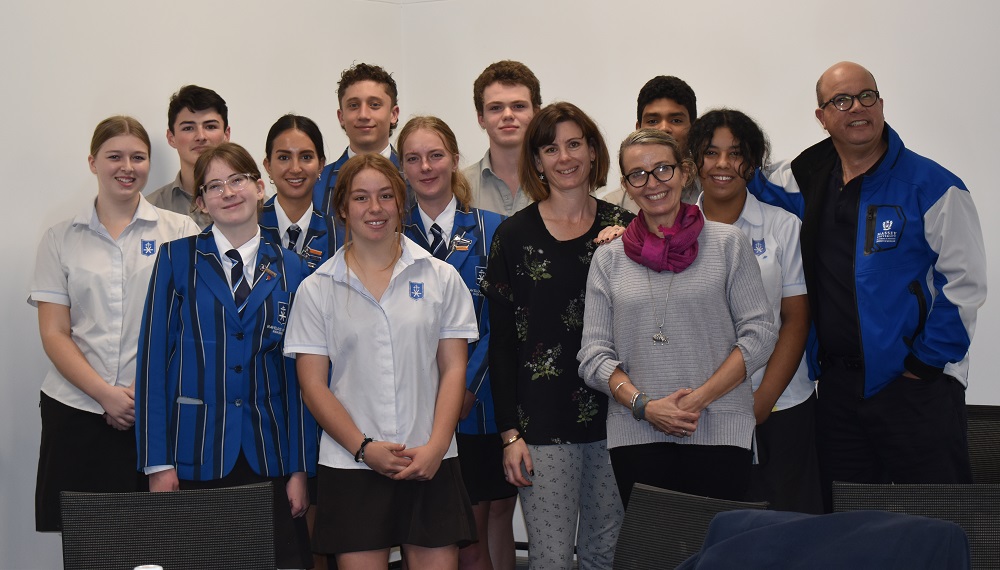 Massey University Havelock North High School trip 2023
Bringing language learning to life
That idea of ownership is something she tries to recreate in her classroom. She sees her role as a guide rather than an instructor, helping students build the confidence to take charge of their own learning.
This approach was reflected in a recent achievement by one of her students, who won first place in a nationwide gastronomic video competition. The project required the student to use Spanish in a practical, creative way, combining language with storytelling and digital skills.
Organised by the Education Office in Wellington and the Embassy of Spain in New Zealand, in collaboration with STANZA and the Cervantes Institute in Sydney, the competition provided a national platform for students to showcase their work.
“It was an amazing experience for my student because she was able to learn Spanish for a real-life purpose. She was also able to combine her language skills with other cross-curricular skills, such as video creation,” Anita says.
What stood out most to her was the level of ownership the student had over the project.
“It was motivating for her because it enabled her to have choice over what she made, express her passion for Hispanic culture and be creative,” she says. “The competition rewarded and recognised her effort, which was great.”
Moments like this reflect what Anita values most in teaching, not just achievement, but growth. In her classroom, she encourages students to take risks and to accept that learning involves making mistakes.
“I try to show them that failing is okay. If they give things a go, they will find success and that will lead to more success.”
She is also mindful of how important it is for students to feel safe and motivated. Drawing on research around language learning, she focuses on creating a classroom environment where students feel connected, capable and heard.
“They should have some choice in what they do in class and a voice. They should be able to relate to the material they are studying, and feel like they are making progress,” she explains.
When those elements come together, students are far more willing to participate and push themselves further.
Beyond the classroom, Anita is passionate about the role languages and social sciences play in shaping young people. For her, these subjects are not just academic, they are essential life skills.
“They foster social connection and allow students to explore different customs, cultures and perspectives. They help students navigate life in multicultural New Zealand and help us to create global citizens.”
She also believes that learning a language offers something deeper than what technology can provide. “You cannot build a rapport with someone, build trust and develop a personal connection through a translator. It takes effort to learn a language and that effort is recognised and appreciated.”
A lifelong connection
Having taught in Japan, the United States and Aotearoa New Zealand, Anita has seen firsthand how important connection is in learning. “Teaching in different places has shown me how important it is to build relationships with your learners. It has shown me that teaching is more than content. It is about connecting that content with your learners,” she says.
Now, after nearly ten years at Havelock North High School, it is the people who continue to inspire her.
“He tāngata, he tāngata, he tāngata,” she says. “The people. They are what get me up every morning.”
The connection with Massey University is an important part of her journey. She first completed her Graduate Diploma of Secondary Teaching in 2006, before returning in 2009 to further develop her expertise in languages and education.
From 2009 onwards, she completed a Graduate Diploma of Arts, studying Spanish Language I, II and III alongside subjects such as Greek History, Love and Sexuality in Ancient Greece, and Roman Art and Society. She later went on to complete a Postgraduate Diploma in Second Language Teaching, focusing on the methodology of second language teaching, as well as curriculum and materials design.
For Anita, however, it was the relationships that mattered most.
“Watching passionate teachers in action is one of the best forms of professional learning. My relationship with Massey didn’t end when I finished my studies. I still connect with lecturers and classmates, and continue to learn from them.”
After more than 15 years in education, it is often the small moments that stay with her. Students using Spanish to speak with family members, connecting with people while travelling, or forming friendships across cultures.
“It is not about the words. It is about connecting with someone and showing that you have made the effort to learn about them and their language and culture.”
For those considering a career in teaching, her advice is simple:
“Go for it. Step out of your comfort zone. It is an amazing job where you get to work with inspiring people every day. You will never be bored and you will never stop learning.”
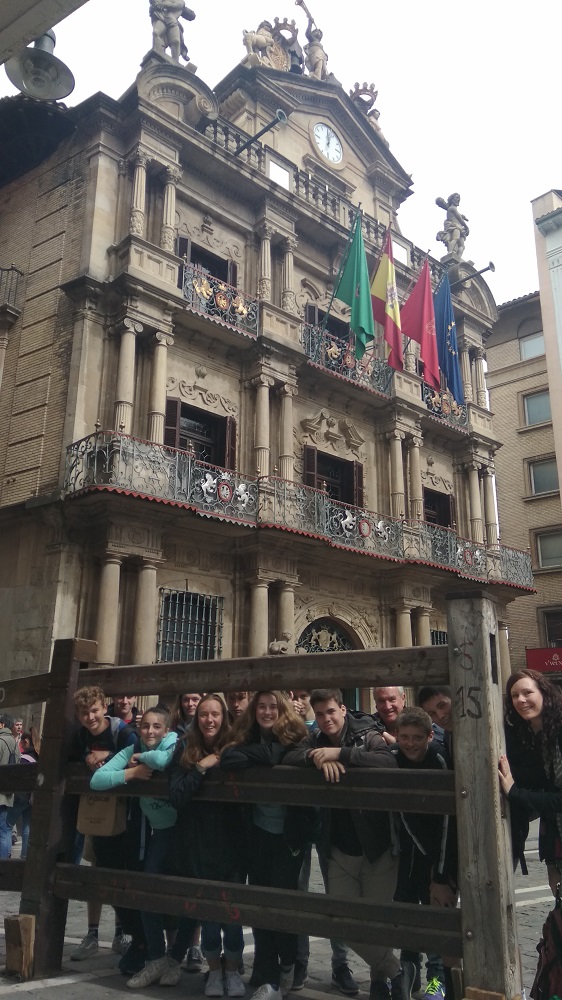 Pamplona 2019 Spain